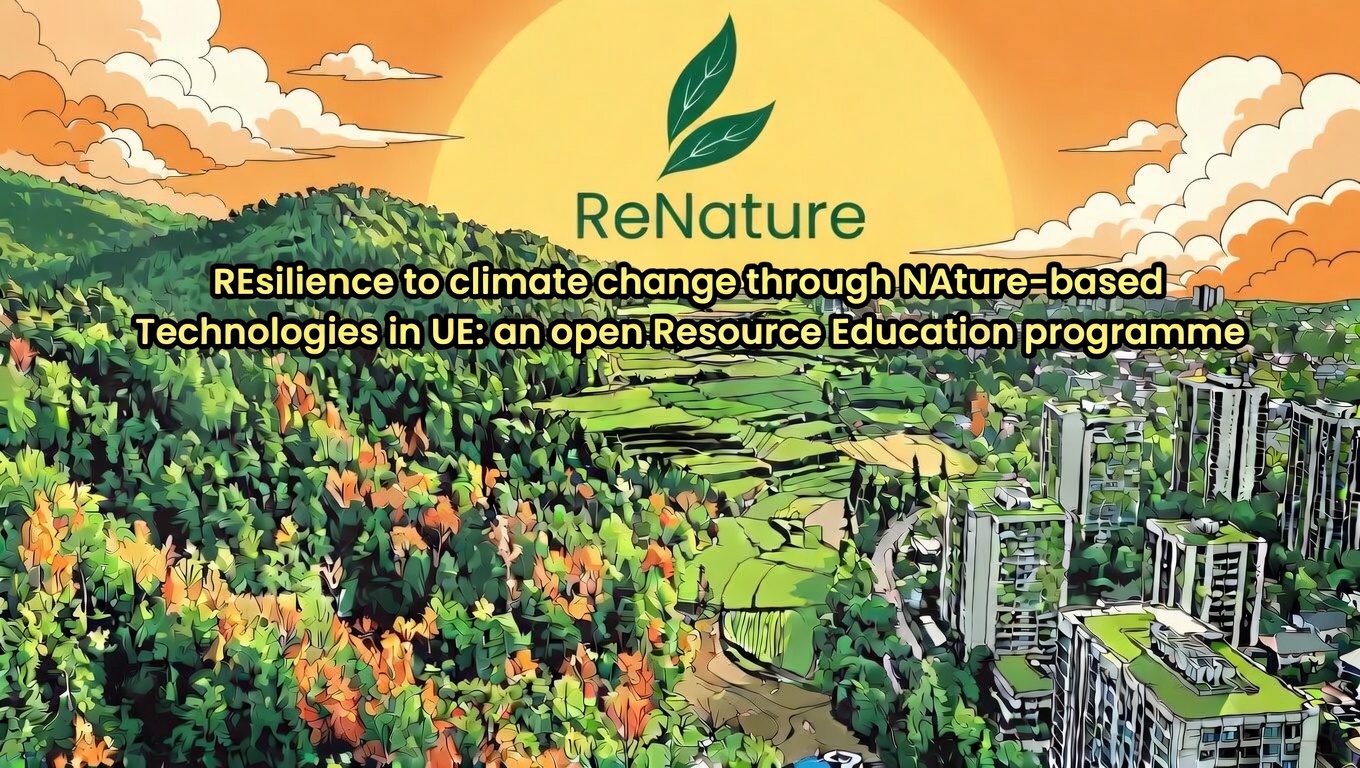
RENATURE was conceived with a clear objective: to strengthen education on climate and sustainability by making it more practical, accessible, and future-oriented through the use of Nature-based Solutions (NbS). NbS are solutions inspired by nature that enhance the resilience of both ecosystems and communities to climate change, providing effective, sustainable, and often low-cost responses. A key feature of NbS is their low level of engineering, which makes them cost-effective and socially equitable: they do not require large initial investments nor highly complex technical skills for long-term implementation and co-management. For this reason, NbS are now central to European strategies, from the Green Deal to major research and innovation initiatives, and represent one of the most promising tools to drive a resilient and inclusive green transition.
NbS often evolve from practices developed in climate-vulnerable contexts, where communities have long created adaptive solutions to cope with environmental challenges. This is the case of “fanya chini” rainwater harvesting systems in Kenya, which improve soil water retention and agricultural productivity, or floating agriculture in Bangladesh, which allows cultivation during flood seasons through floating platforms. These practices, originally rooted in local knowledge, have been progressively adapted to different ecosystems and socio-economic contexts, demonstrating how NbS can strengthen climate resilience at a global scale through intergenerational and cross-cultural knowledge exchange.
At the same time, RENATURE promotes participatory co-management approaches such as Community-driven Development (CDD), Community-based Natural Resource Management (CBNRM), and Integrated Conservation and Development Projects (ICDP), which place communities at the center of decision-making and operational processes. When NbS are developed within these collaborative frameworks, they become not only environmental tools but also real opportunities for local development, capable of generating fair and inclusive employment. According to the latest United Nations estimates, this sector could create up to 32 million decent jobs worldwide.
In this context, RENATURE specifically targets young people, aiming to guide them towards the green jobs of the future by providing concrete skills to operate autonomously and effectively in the sustainability sector. The project develops an innovative educational programme based on Open Educational Resources (OER), designed to transfer up-to-date knowledge on NbS and, above all, practical competences for their application and co-management in real-world contexts, with a strong focus on building more resilient systems.
A core element of the project is the development of key competences from the European GreenComp framework, enabling learners to acquire a systemic understanding of sustainability, practical intervention skills, and a strong sense of environmental and social responsibility. In this way, RENATURE goes beyond theoretical knowledge, empowering young people to become active agents of the green transition, fostering forms of sustainable self-employment that, thanks to the accessible and replicable nature of NbS, can be initiated even with limited resources and adapted to diverse territorial contexts.
Through this approach, the project contributes to making the green transition not only necessary, but also concrete, inclusive, and capable of generating new professional opportunities, while strengthening the resilience of both communities and ecosystems in the face of climate challenges.